Victoria – The Beginning
I was born in Melbourne on 19 January 1961, but Tasmania was already deeply embedded in my family’s story.
Both of my parents were Tasmanians. They had moved to Victoria only a few years before I was born, part of a family move that temporarily took them away from the island where generations of our family had lived.
My first five years were spent in Victoria—first in suburban Melbourne and then in the small country communities of Caramut and Inverleigh. They were years I remember mostly through family photographs and stories, although by the end of our time in Victoria my own memories begin to emerge.
In early 1966, shortly after my fifth birthday, my parents made a quick decision that would shape the rest of my childhood.
We were going back to Tasmania.
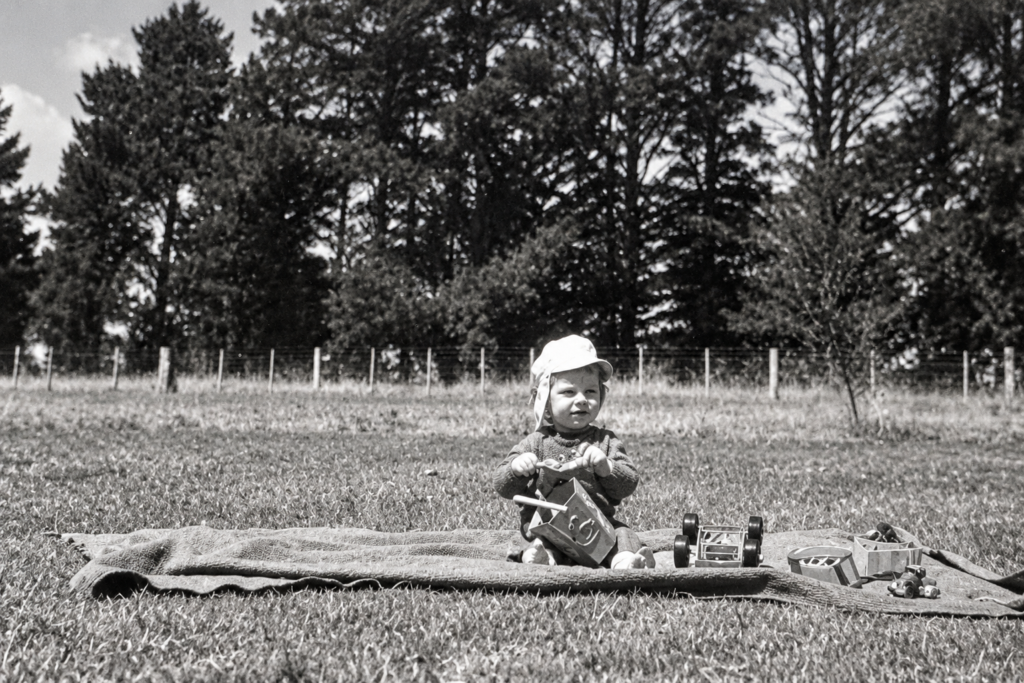
Born in Melbourne
I was born at the Royal Women’s Hospital in Carlton on 19 January 1961. By then the hospital had been delivering Melbourne’s babies for more than a century.
Founded in 1856 as the Melbourne Lying-in Hospital, it had recorded its 200,000th birth five years before I arrived. During the second half of the twentieth century, more women gave birth at the Women’s than at any other hospital in Australia.
I was therefore one of hundreds of thousands of Melbourne babies whose lives began at “the Women’s”.
Among the family records that have survived are my birth certificate and, remarkably, the hospital identification tag that was attached to me as a newborn. Together with family photographs, they provide a physical record of the very beginning of my story.
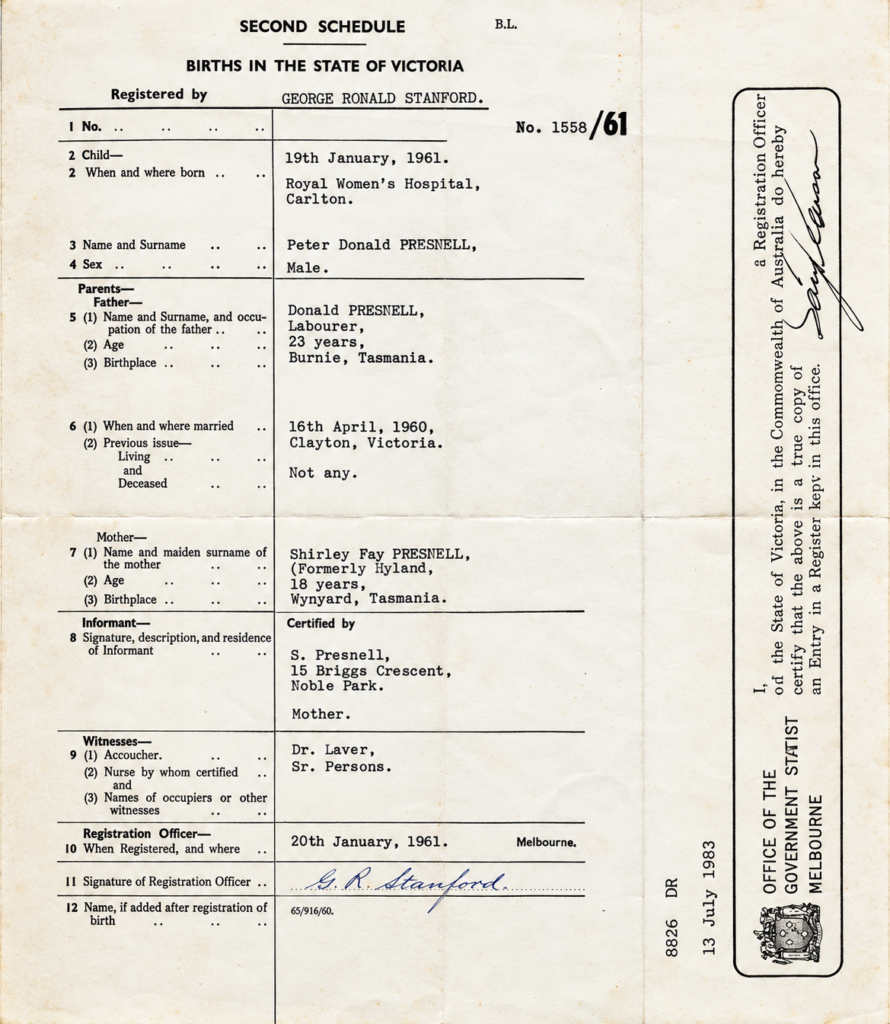
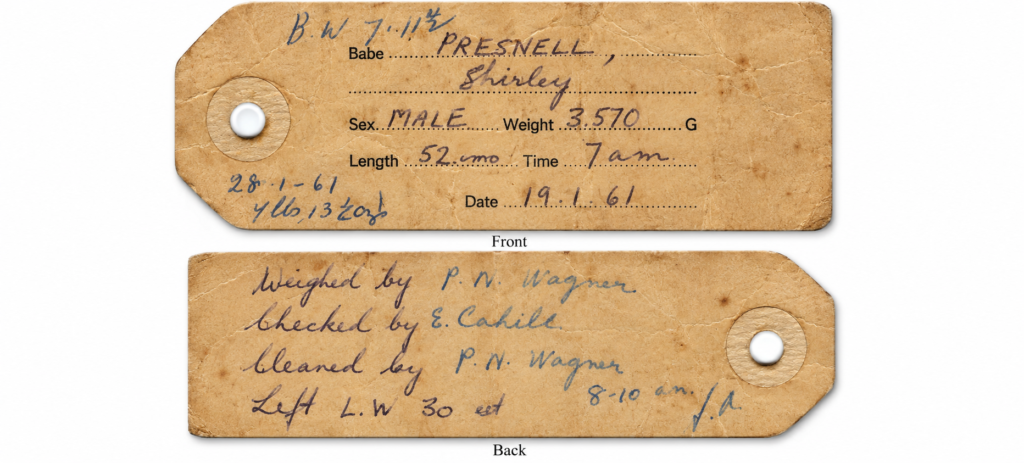
Birth records from the Royal Women’s Hospital, Carlton — 19 January 1961.
Briggs Road, Noble Park
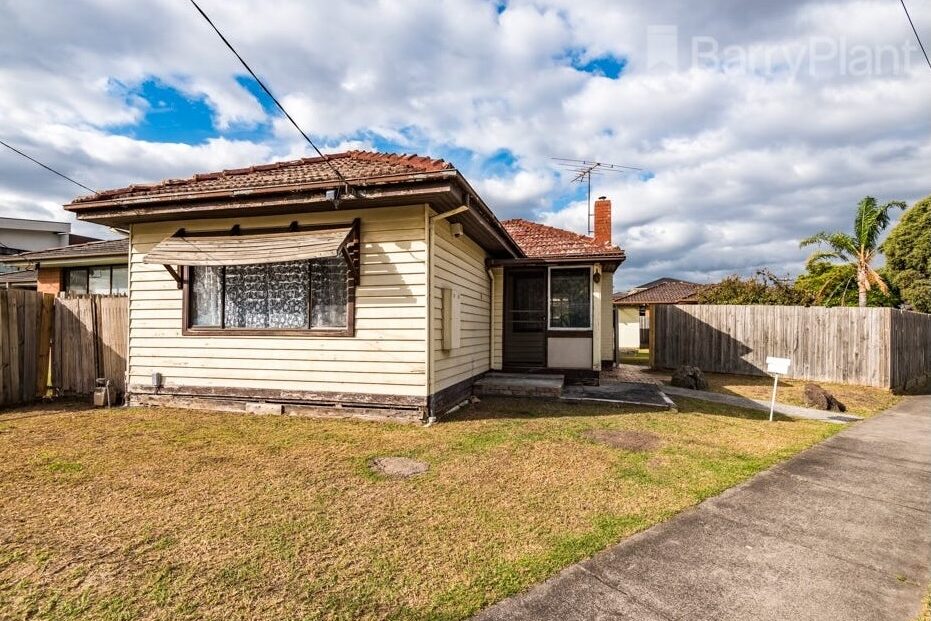
When I was born, my parents were living in a rented house in Briggs Road, Noble Park.
Their own story had begun in Tasmania. My mother’s family had moved to Melbourne first, where her father found factory work. My father had been boarding with my mother’s parents in Tasmania after having difficulties at home with his own parents. When Mum moved to Melbourne, Dad followed her and also found factory work.
So although I was born a Victorian, the young family into which I arrived was very much a Tasmanian family temporarily making a life on the mainland.
My Christening
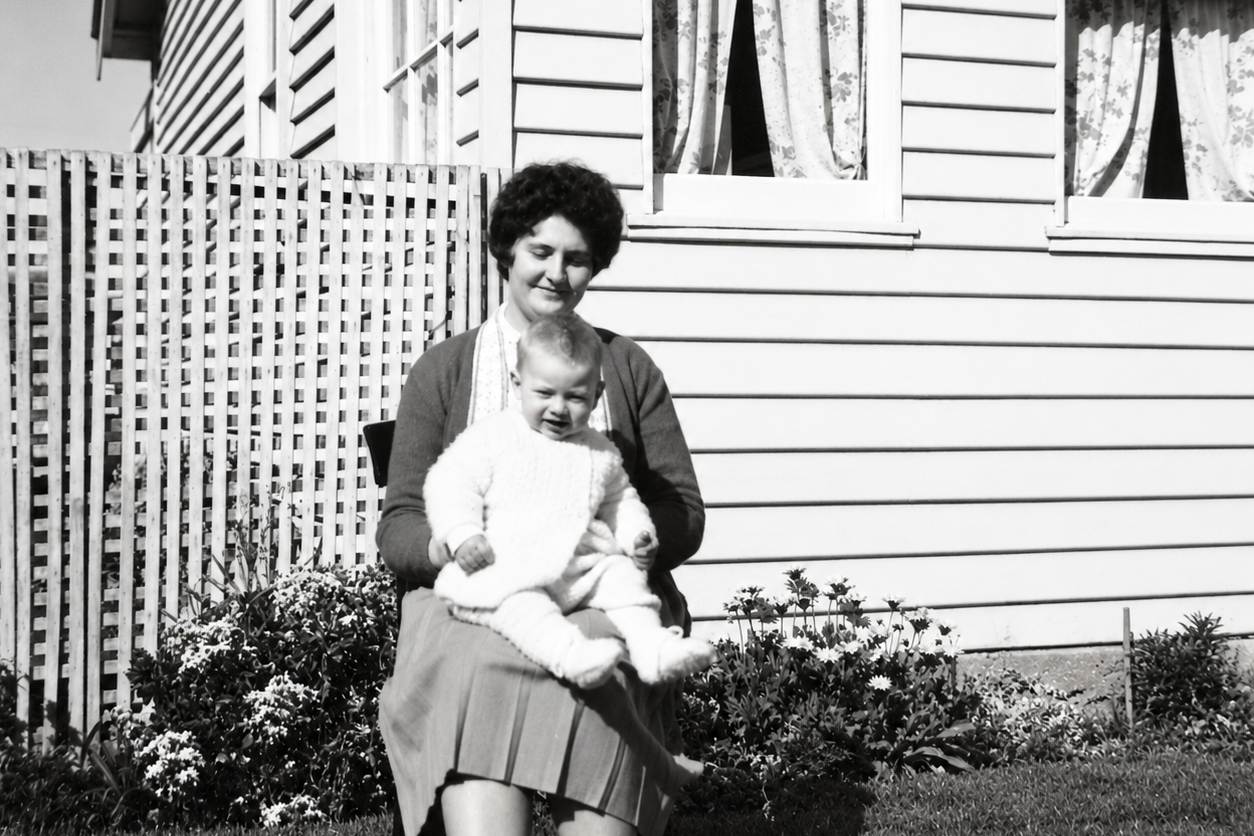
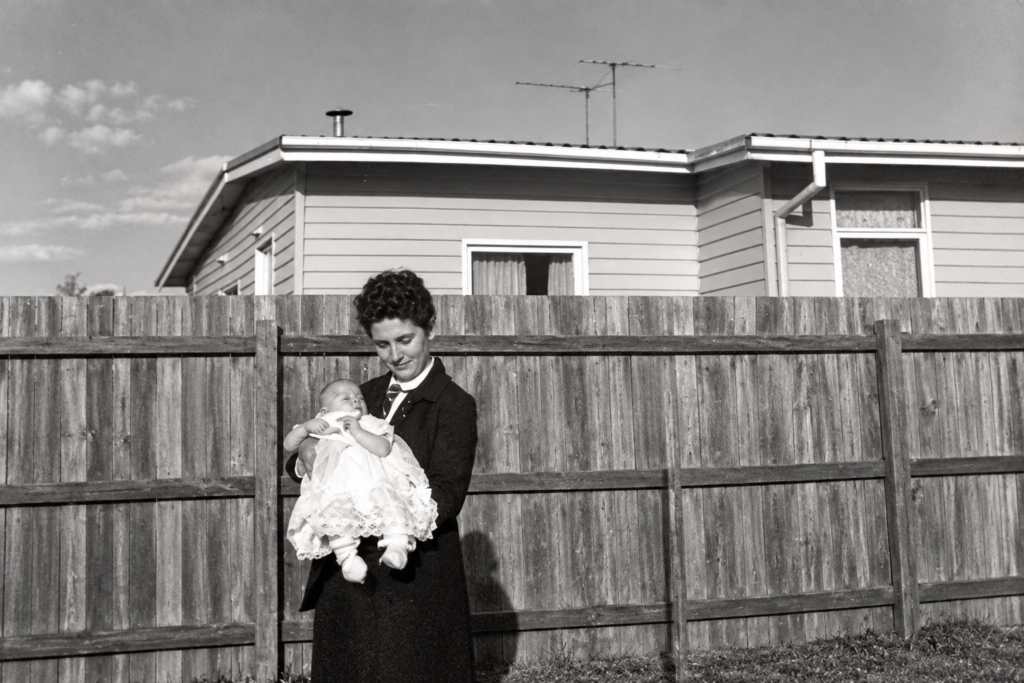
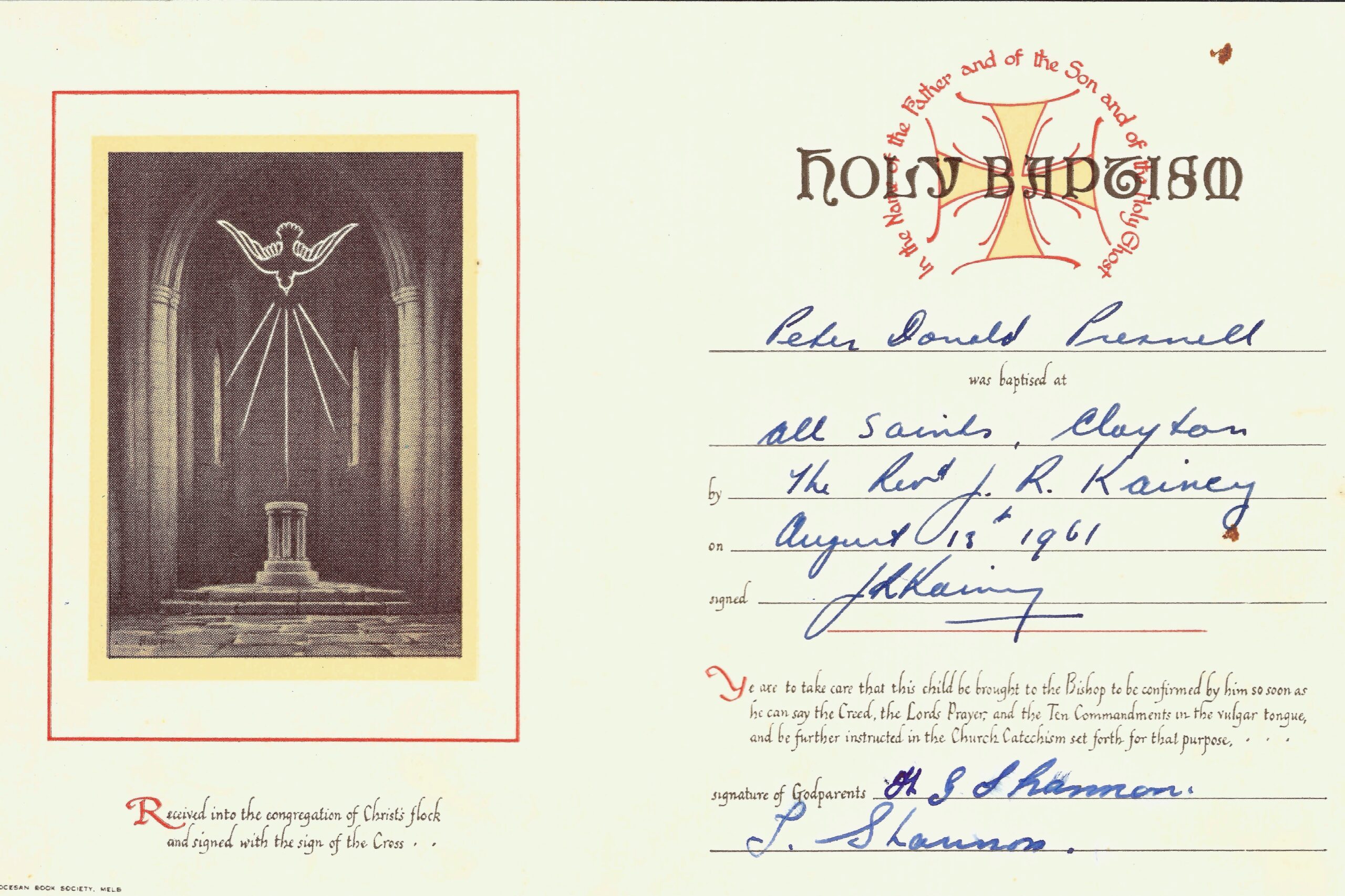
On 13 August 1961 I was christened at All Saints, Clayton.
Several photographs survive from the day, including one of my uncle Trevor holding me, as well as my original christening certificate.
Country Victoria
Caramut
Around 1962 our lives changed considerably when we moved from suburban Melbourne to Caramut in western Victoria.
Dad worked as a farm labourer on a sheep station associated with the King family. Mum also remembers doing housework while we were at Caramut.
I was too young to remember the move, but this period is unusually well documented in our family photographs. Mum has identified the photographs of me through about the age of two as having been taken at Caramut.
They show a very different childhood landscape from suburban Noble Park—open paddocks, fences, farm buildings and the family car, with a small boy gradually becoming part of the scenery.
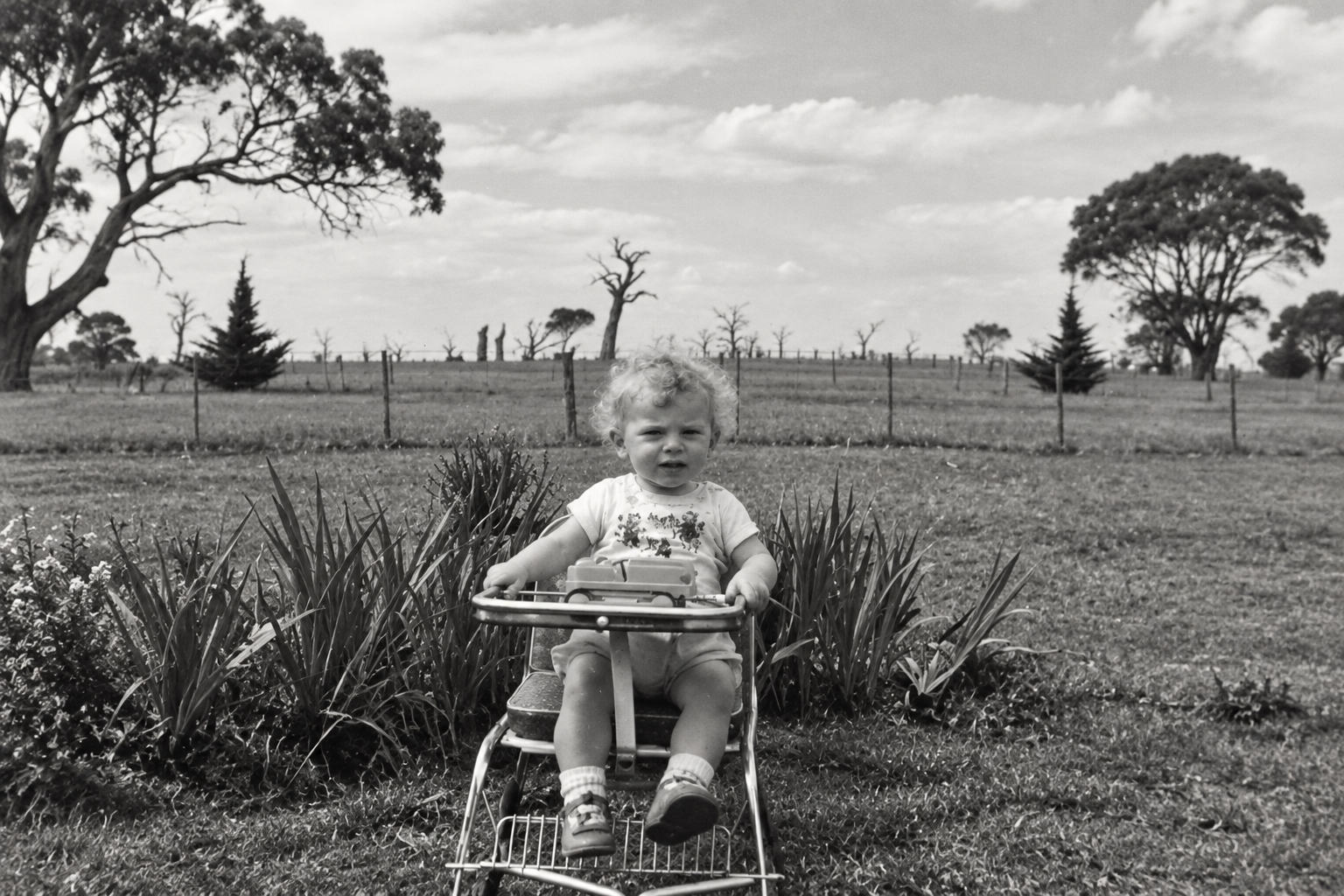
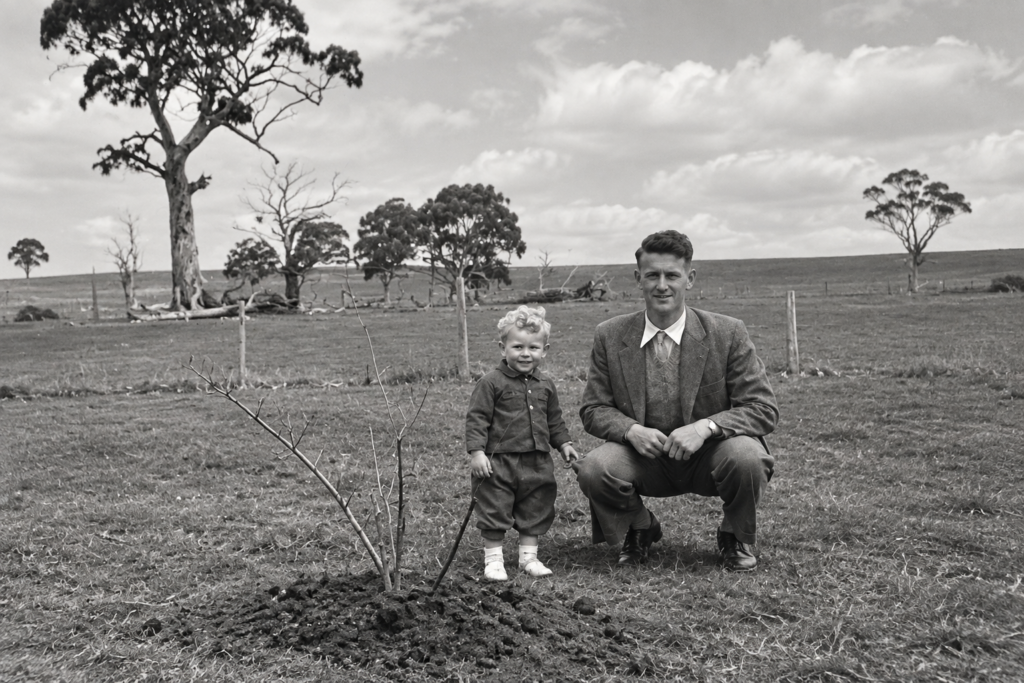
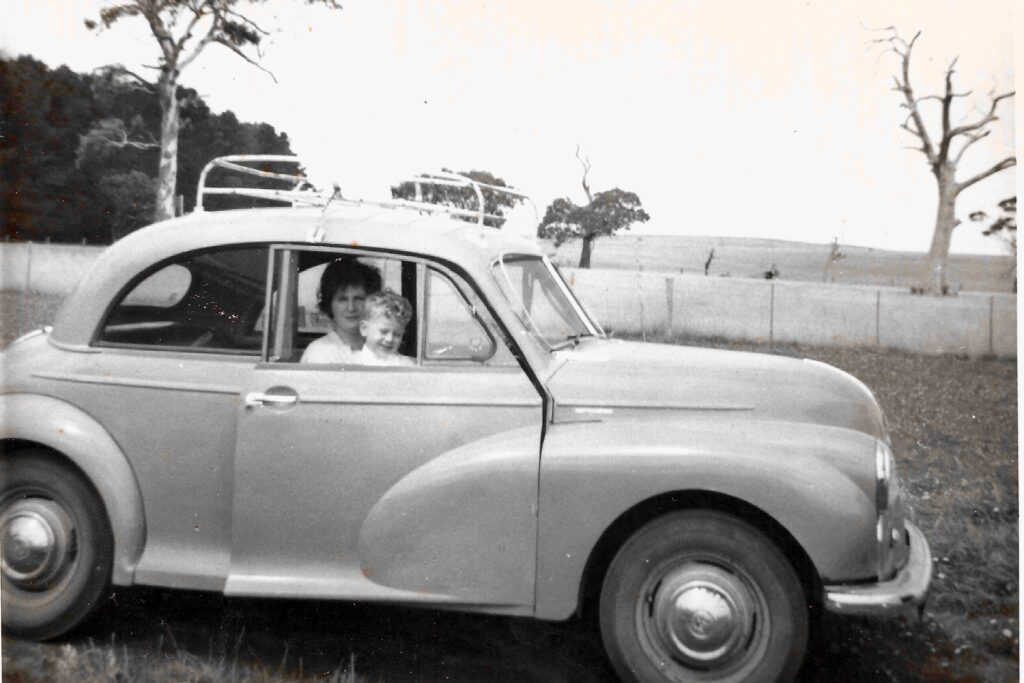
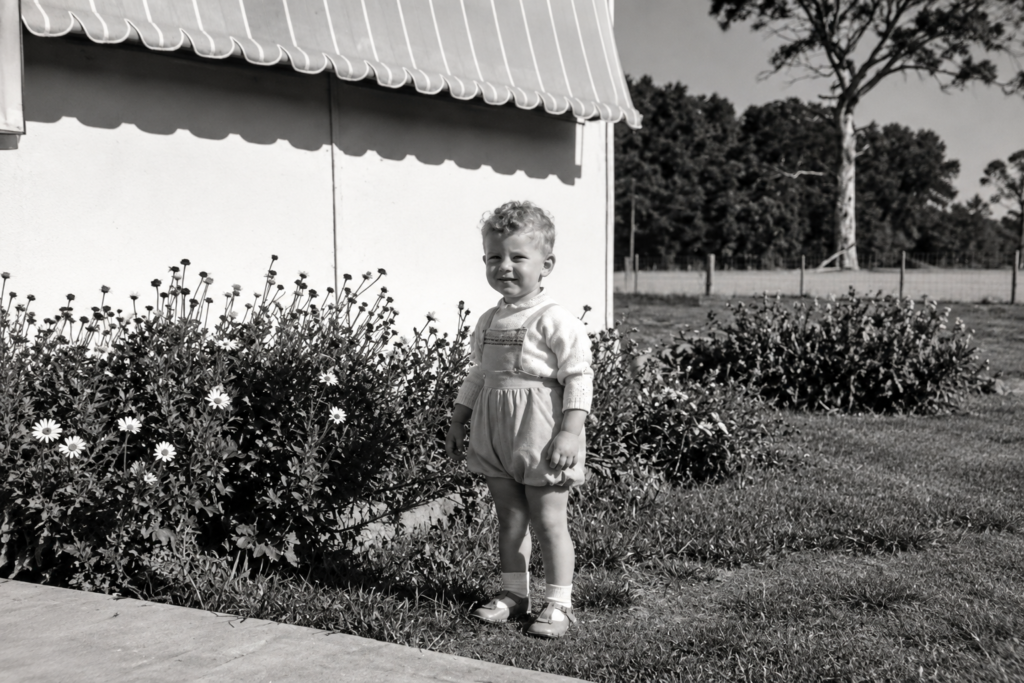
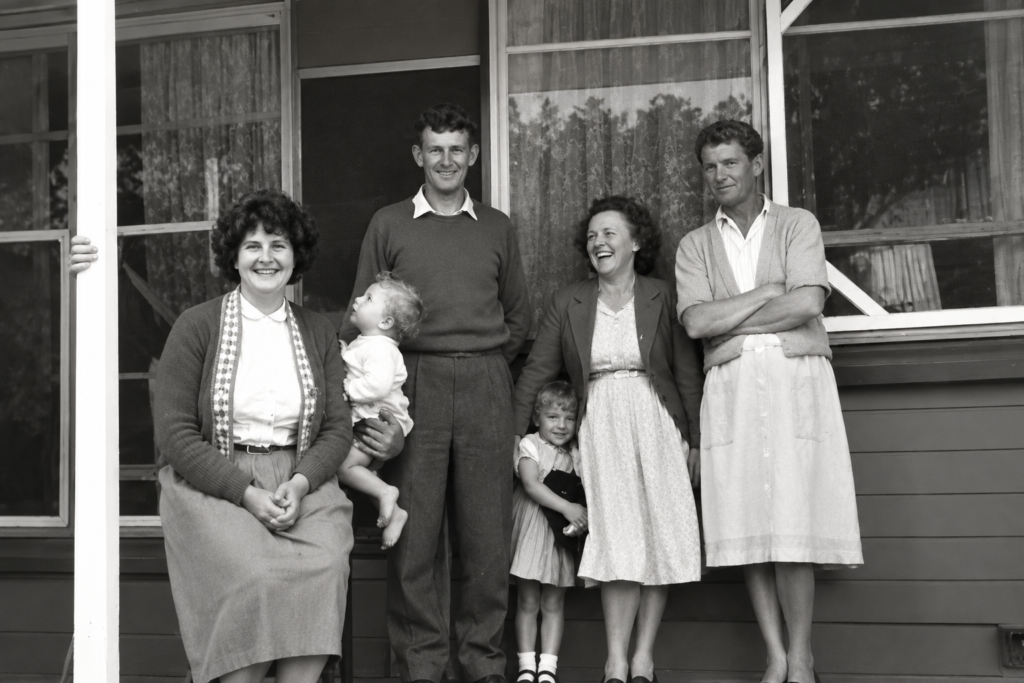
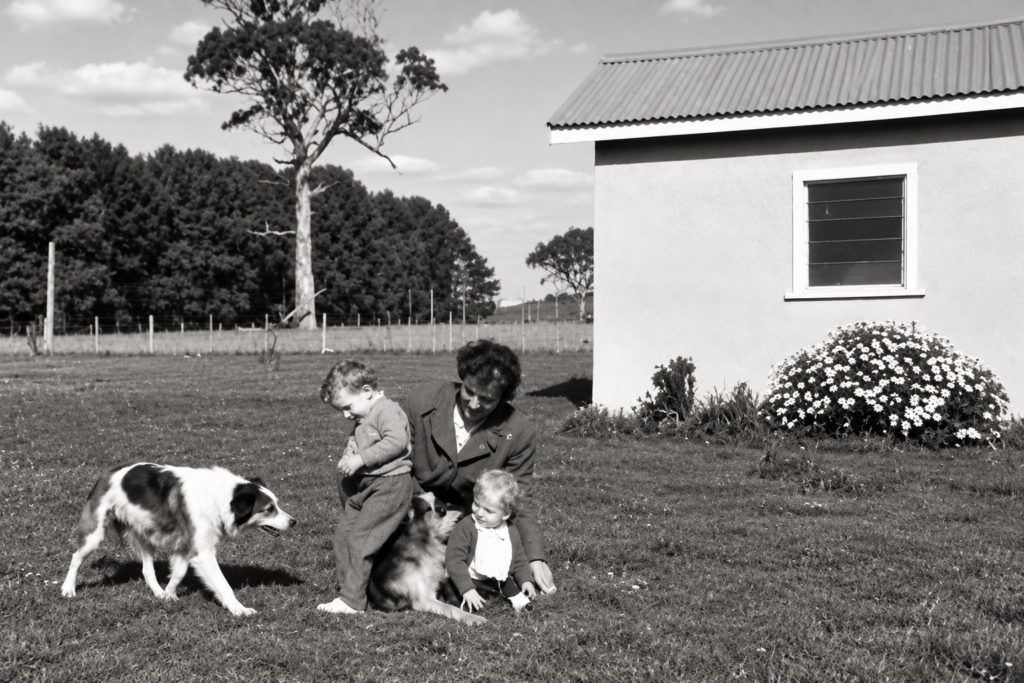
Family life at Caramut, c.1962–1964. Dad worked on a local sheep and cattle property, with a house provided for our family.
Life On The Station
Dad earned £60 a month, with a small house provided for the family. There was another very practical part of the arrangement. Each week a lamb was butchered and divided between three families, so our share of lamb became a regular part of the family diet.
I ate a lot of lamb during those early years. Perhaps that is where a lifelong preference began — lamb remains one of my favourite foods today.
And Then There Were Two
My sister Jenny was born in Warrnambool in 1963.
Caramut was about 56 kilometres from Warrnambool, making the city an important regional centre for our family. The photographs from this period provide useful markers for dating our lives at Caramut, including photographs of Jenny as a baby and the two of us together.
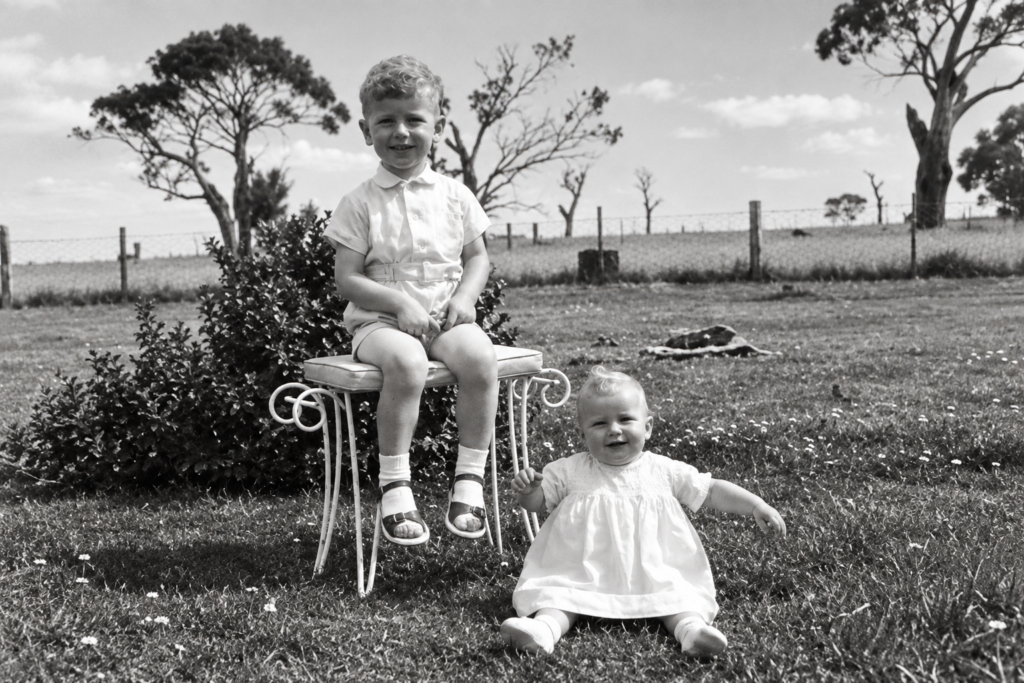
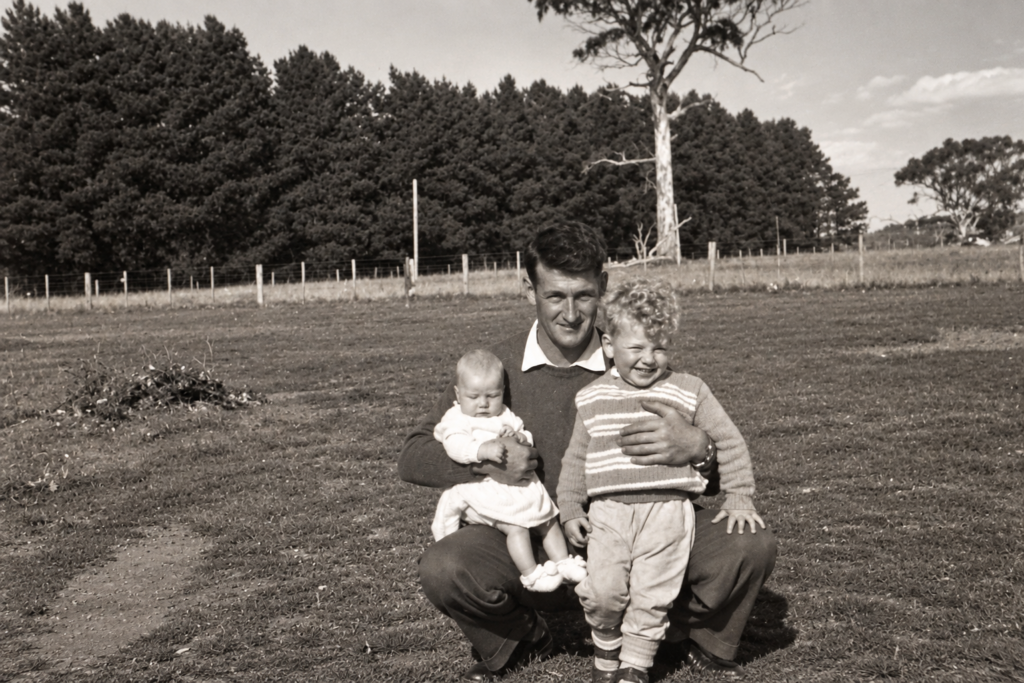
Fletcher Jones
Warrnambool also meant Fletcher Jones.
Mum was an avid gardener and enjoyed visiting the famous gardens surrounding the Fletcher Jones factory. We apparently went there several times, and family photographs record some of those visits.
One of the earliest identifiable visits appears to have been in 1964, after Jenny was born.
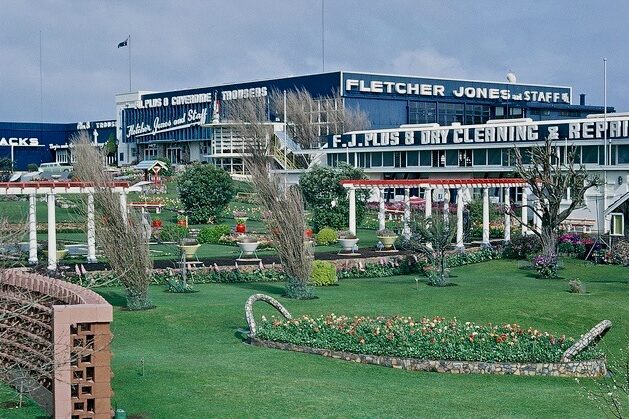
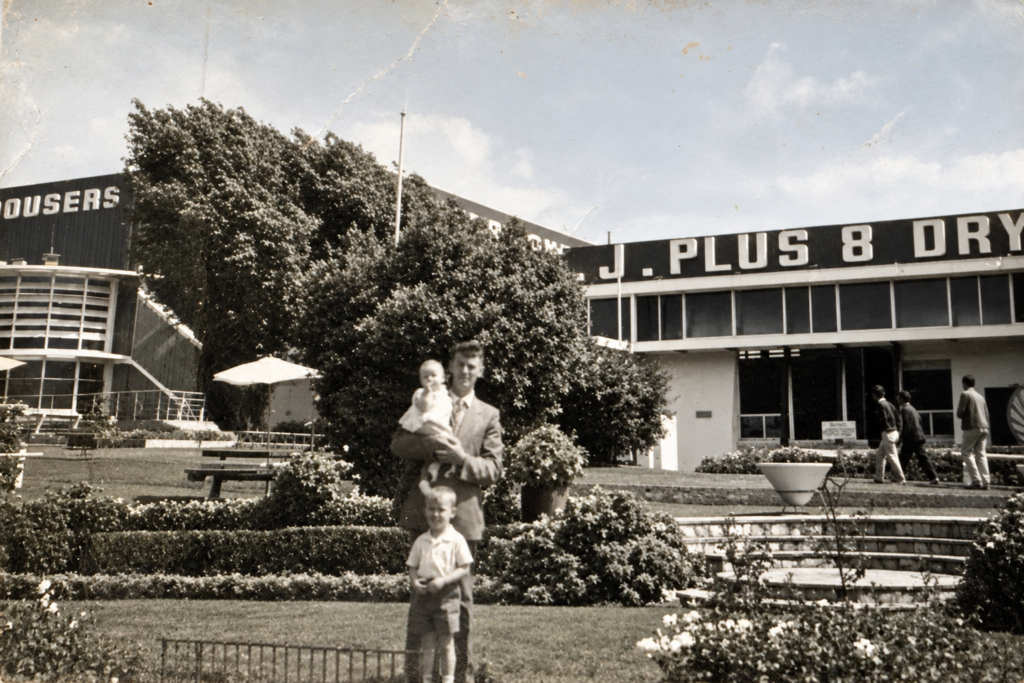
The gardens at Fletcher Jones left a lasting impression. Years later, when we built our house in Somerset, we included a large flower basket in the front yard inspired by the baskets at Fletcher Jones.
Inverleigh
By around 1965 we had moved again, this time to Inverleigh, west of Geelong.
Mum now remembers that there were actually two different properties and two jobs during our time at Inverleigh, with the family leaving the first one fairly quickly. Unlike at Caramut, Mum did not work there.
This is also where my own memories become much clearer.
My personal memories of this time include sheep being shorn, beginning school, and going to the movies.
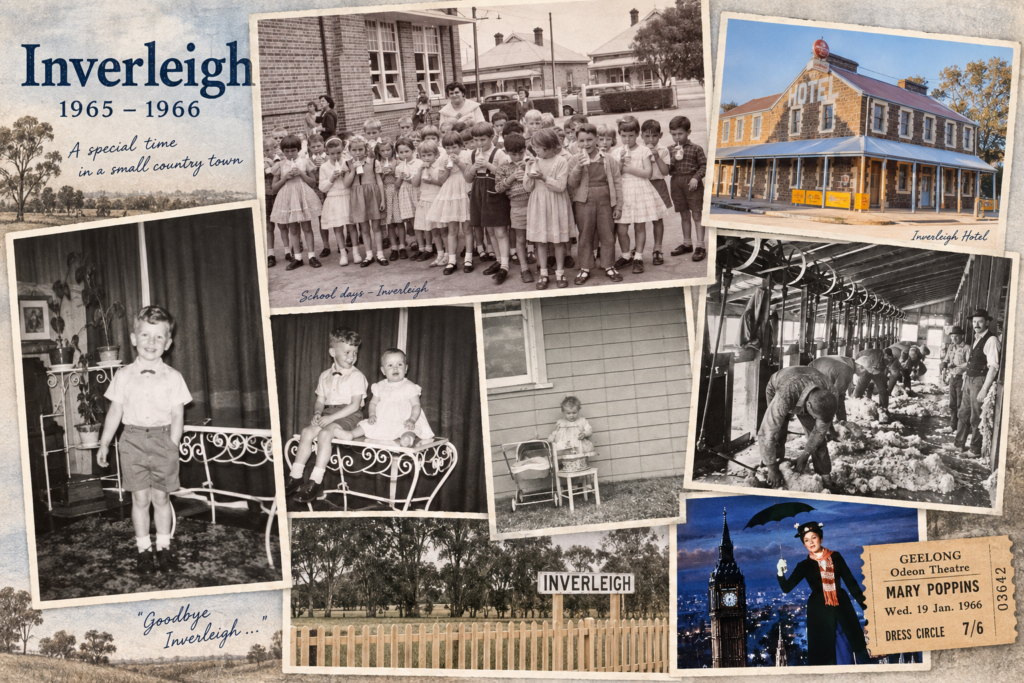
Mary Poppins on My Fifth Birthday
One memory has stayed with me particularly clearly.
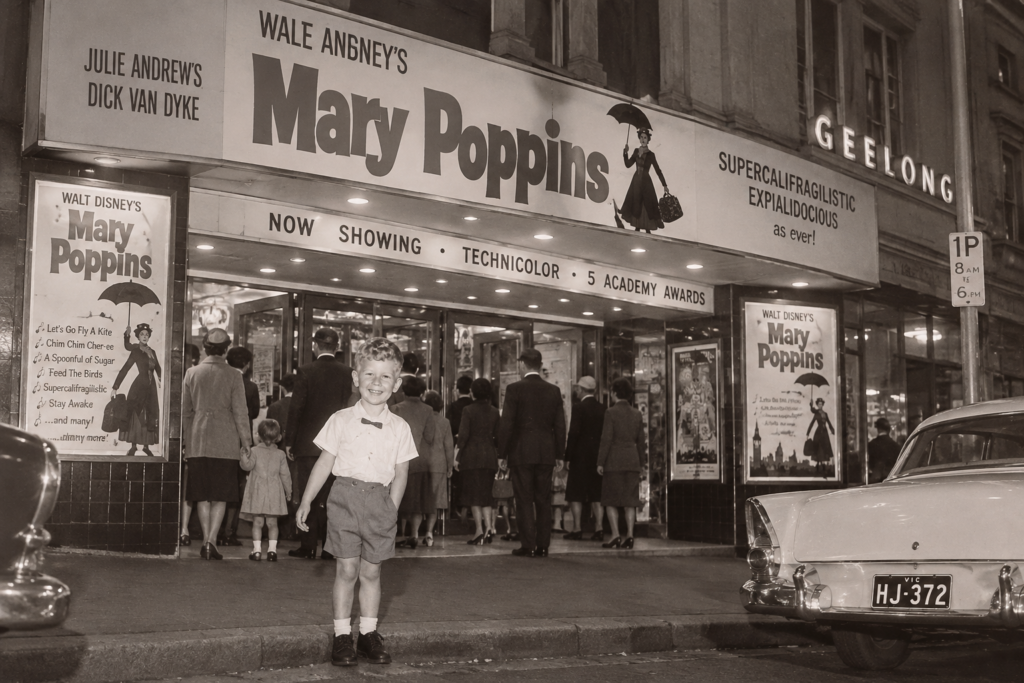
I remember going to see Mary Poppins while we were living at Inverleigh. For years I believed it was connected with my fifth birthday.
When I asked Mum about it in 2026, she remembered it too. She recalled taking me to see Mary Poppins in Geelong for my birthday.
I turned five on 19 January 1966.
It’s a tiny event in the course of a life, but somehow the memory survived for sixty years: a five-year-old boy from Inverleigh, going into Geelong with his mother to see Mary Poppins.
My First School
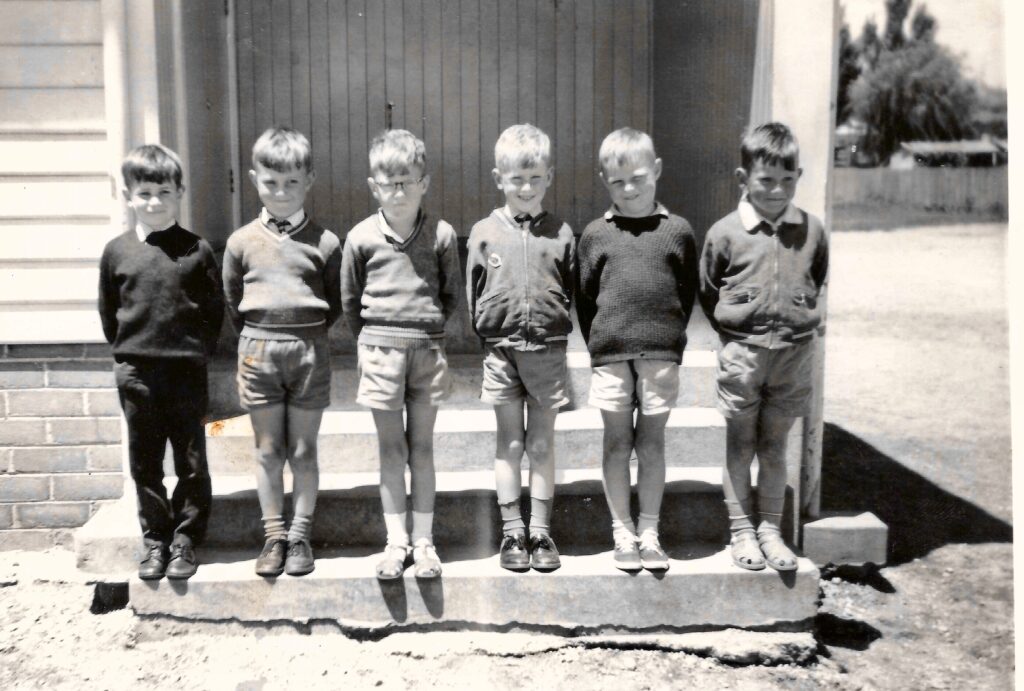
Soon afterwards I started school at Inverleigh Primary School.
I was only five, and my time there was brief. One of my strongest memories has nothing to do with lessons.
I remember the school milk.
The little bottles were handed out to the children, and I remember being asked whether I wanted my bottle shaken.
It is one of those peculiar fragments childhood preserves while far more important things disappear completely.
I could only have attended Inverleigh for a short time, because another major change was approaching.
Going Home
In early 1966 my parents made a quick decision to return to Tasmania.
Even Mum, looking back sixty years later, could not remember exactly what prompted the decision. Dad would soon be working at the paper mill on Tasmania’s north-west coast, where his own father also worked.
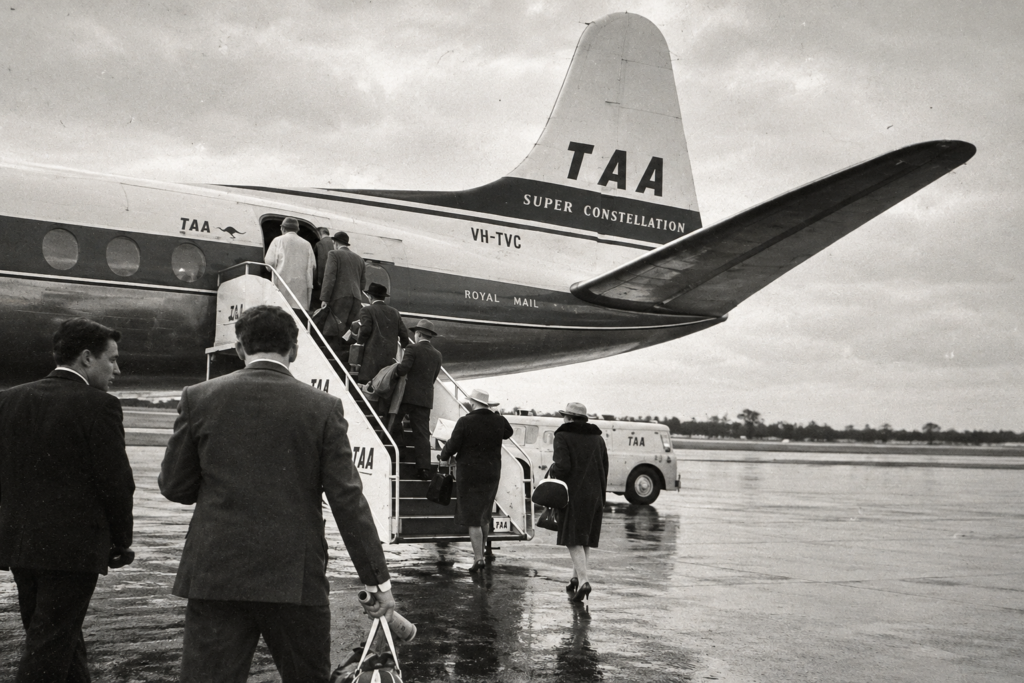
My recollection is that Mum, Jenny and I flew from Melbourne to Burnie while Dad brought the family car across Bass Strait by ferry.
I also remember the timing because Australia was changing to decimal currency. Pounds, shillings and pence were disappearing, and dollars and cents were arriving. Somehow that national change became attached in my mind to our family’s change.
Victoria had been home for the first five years of my life.
Tasmania was about to become home.
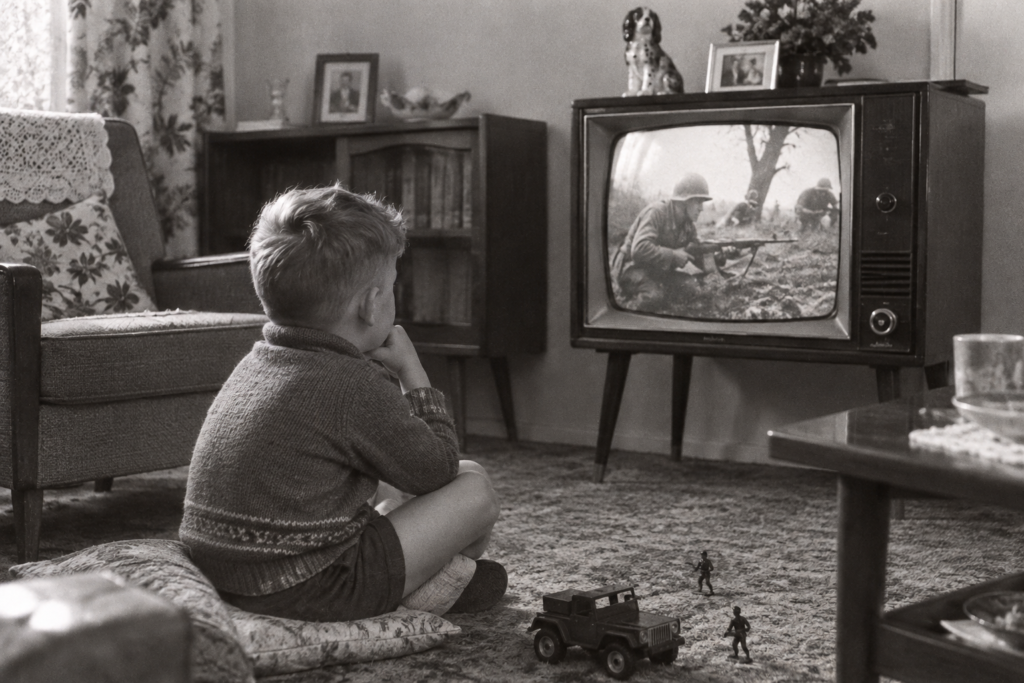
The First Night in Tasmania
I remember visiting the home of my Auntie Muriel Uncle Bob in Wynyard on the night we arrived and watching Combat! on television. Mum no longer remembers that particular evening, but I do. Like so many childhood memories, it remains a small image attached to a much larger event—the night my life in Tasmania began.