Somerset

Back to Tasmania
A New Home in Somerset
In 1968, midway through Grade 2, we left Table Cape and moved into our new home at 66 Lyon Street, Somerset. Mum and Dad had selected the house plan themselves and arranged to have it built. It had three bedrooms, which meant that for the first time I had a bedroom of my own.
After the little cottage at Table Cape, the new house must have felt very modern. We now had an indoor toilet, hot and cold running water and a proper bathroom with a bath — things that had simply not been part of everyday life in our previous home.
My bedroom quickly became very much my own. I was already a devoted St Kilda supporter, so it was decorated in the club colours of red, black and white — right down to the red carpet. Bookshelves covered one wall, giving me somewhere to begin collecting books, an interest that would stay with me.
Moving to Somerset wasn’t just a change of address. It was the beginning of a different kind of childhood: a new house, my own room, a new neighbourhood and a new school.
Mum’s Garden
Mum loved gardening, and over the years we lived in Somerset the garden at 66 Lyon Street steadily grew and improved. What had begun as the garden of a newly built house gradually became something she could be proud of — and a regular backdrop for our family photographs.
There was even a little family rivalry involved. My grandmother lived nearby and was also a keen gardener, and at times it felt as though the two gardens were in competition. One year Mum won second place for Somerset in the annual Wynyard Council flower competition, relegating Grandma to third. I imagine Mum must have enjoyed that result almost as much as the prize itself.
Many of our photographs from those years were taken in the garden. As it changed and matured, it became part of the visual record of our family growing up in Somerset too.

Somerset Primary School
Moving to Somerset also meant changing schools midway through Grade 2. I continued at Somerset State School through Grade 3, before another new school opened nearby and became an important part of the next three years of my childhood.
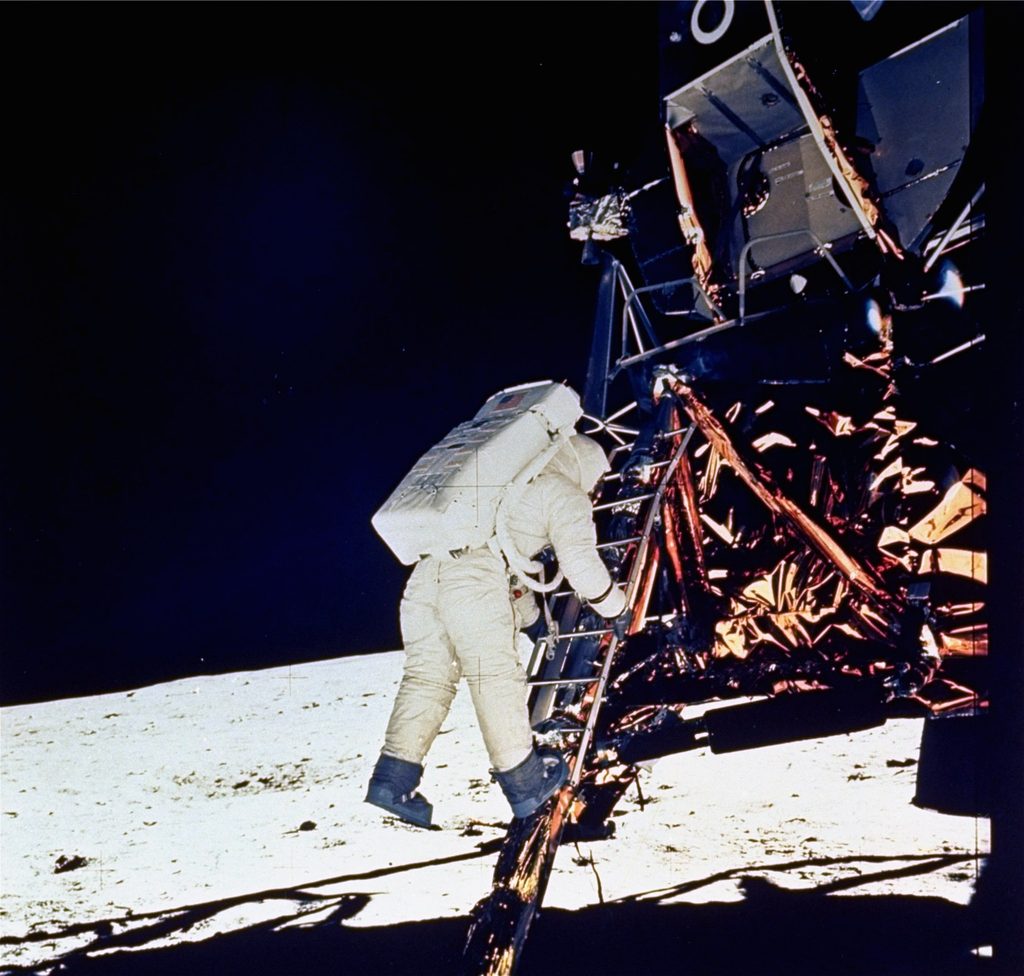
One of my strongest memories from Somerset State School came in July 1969, when Apollo 11 landed on the Moon. I was eight years old and mad keen on astronomy.
I remember standing in the school playground, looking up at the Moon and trying to comprehend that there were actually people up there on its surface. It seemed extraordinary that something I could see in the sky was suddenly a place where human beings were walking.
The school planned for everyone to watch Neil Armstrong walk on the Moon, but there weren’t enough televisions for all the students. Some of us were allowed to go home to watch the broadcast instead, and I was one of them. For a boy already fascinated by astronomy, it was an unforgettable day.
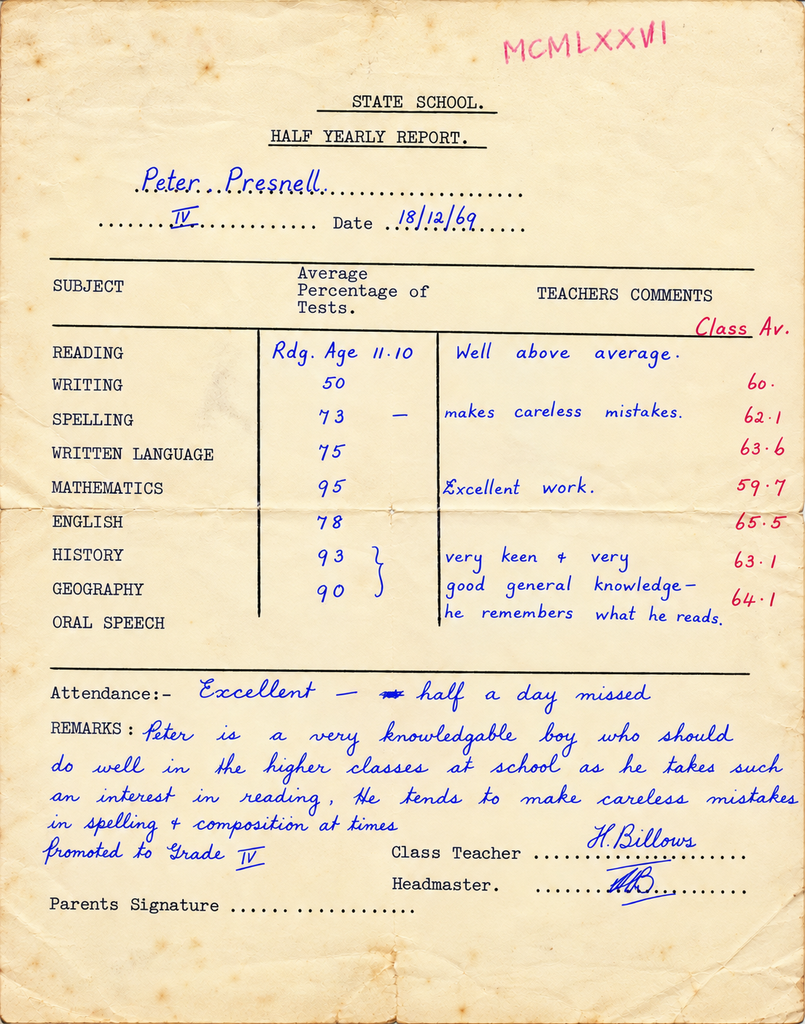
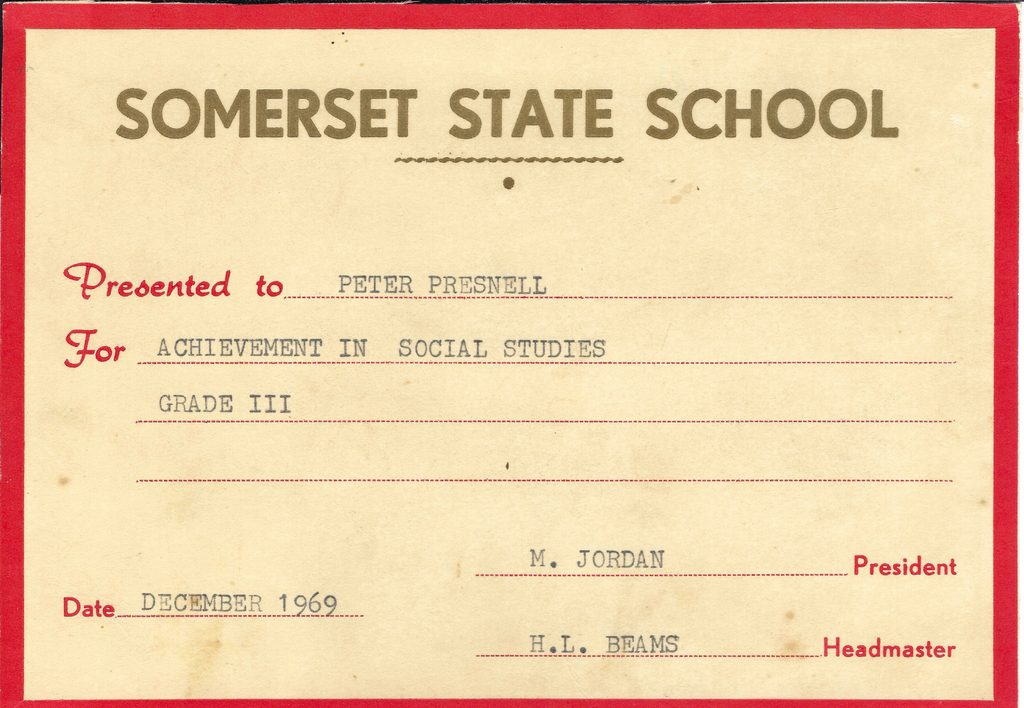
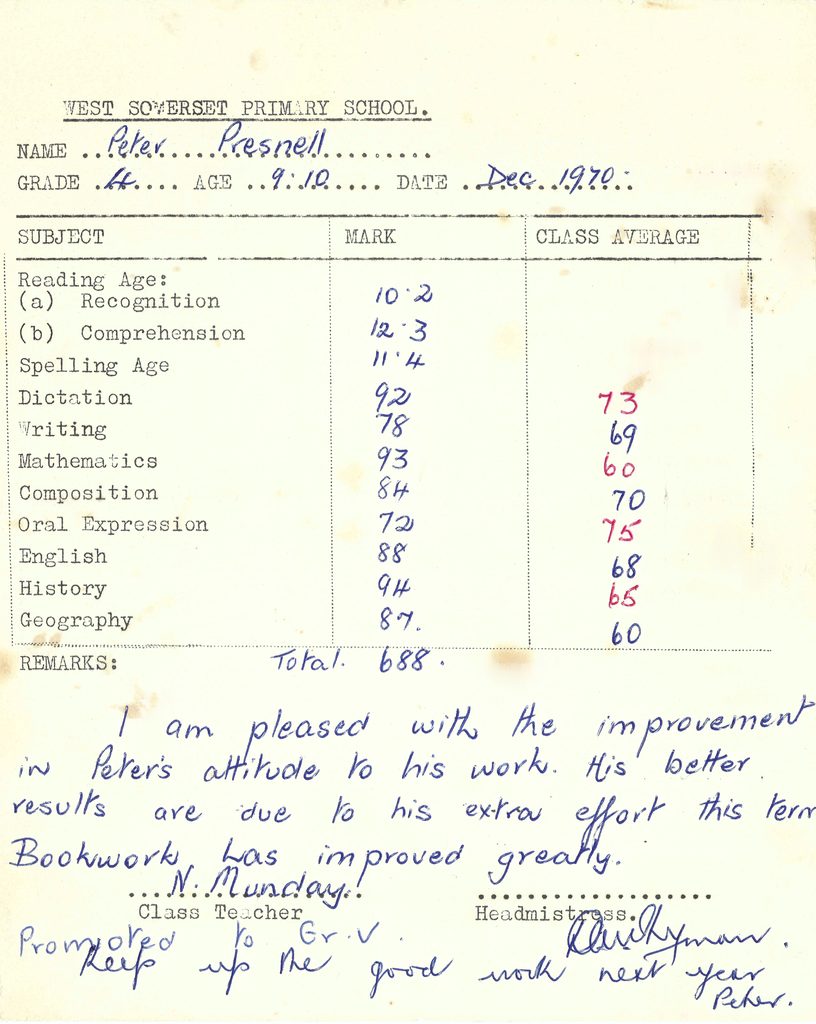
My final report from Somerset State School in December 1969 provides a little snapshot of the eight-year-old I was then. My reading age was recorded as 11 years 10 months, and my teacher described me as a “very knowledgeable boy” who took a strong interest in reading and remembered what he read. Mathematics, history and geography were also strengths — although apparently I was quite capable of making careless mistakes in spelling and composition.
At the end of the year I was promoted to Grade 4. Rather than returning to Somerset State School in 1970, I would become part of the first Grade 4 class at a brand-new school.
West Somerset Primary
West Somerset Primary School had opened in 1969 with just kindergarten, Grade 1 and Grade 2 classes. In 1970 it expanded to include Grades 3 and 4, and I became a member of its inaugural Grade 4 class.
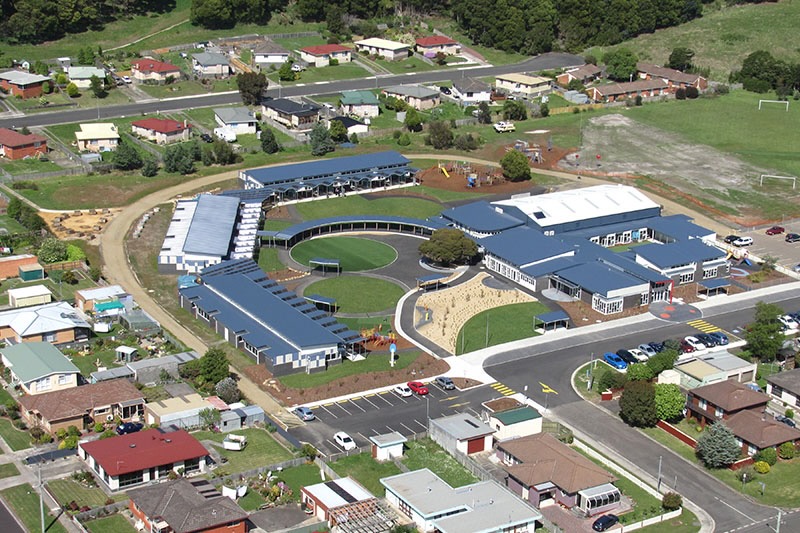
Being in Grade 4 made us the oldest students in the school. As West Somerset expanded, we remained the senior class for the next three years — Grade 4 in 1970, Grade 5 in 1971 and Grade 6 in 1972.
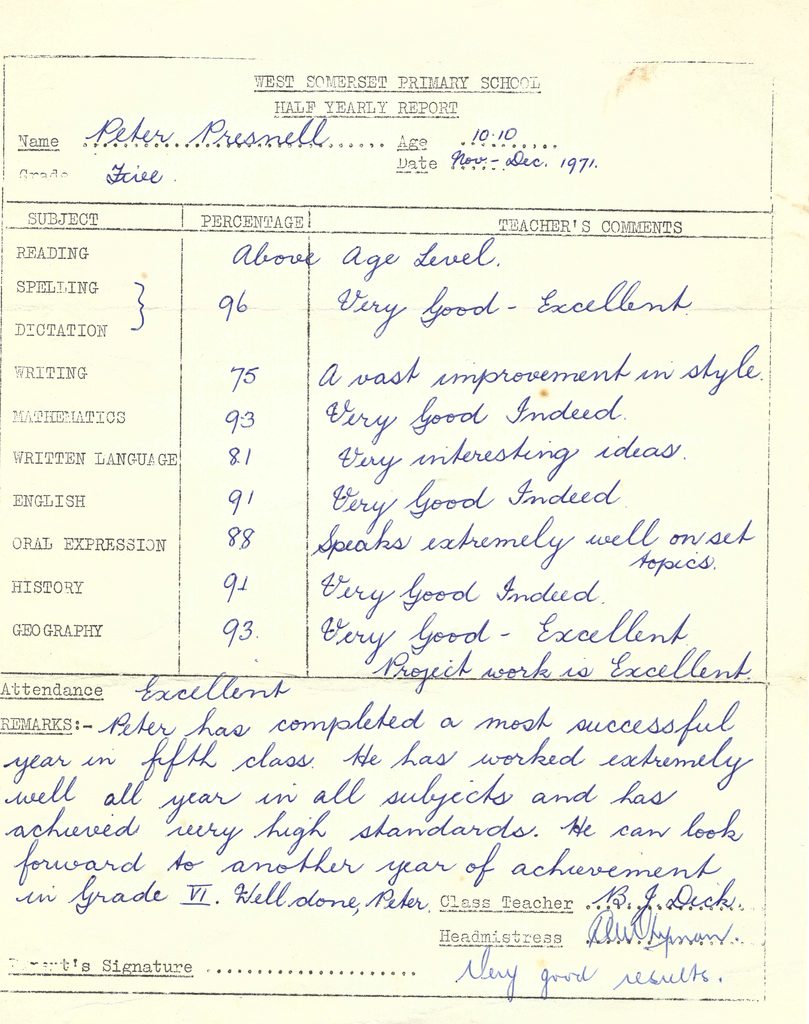
My fascination with space continued. In Grade 5 my teacher was Mrs Dick, and she had a model kit of the Apollo Lunar Module that she allowed me to build for her. Two years after watching Armstrong step onto the Moon, space exploration still had a powerful hold on my imagination.
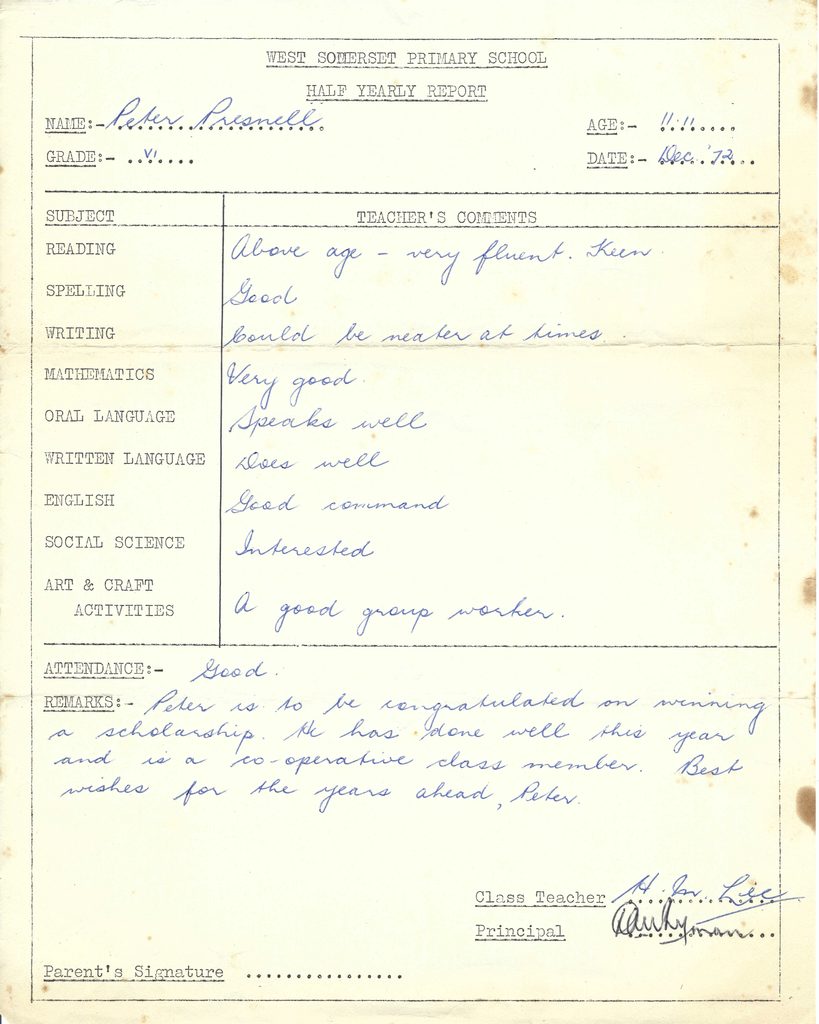
My old school reports provide a surprisingly clear picture of the boy I was during those years. Reading was consistently well above my age, while mathematics, history and geography were particular strengths. Teachers described me as knowledgeable, studious and interested in extending what I knew — although handwriting, bookwork and occasional careless mistakes were recurring themes.
By Grade 6 I was described as a “quiet studious worker” who made good use of whatever material was available to extend my knowledge. At the end of 1972, our class became the first Grade 6 to graduate from West Somerset Primary School and move on to high school.
By Grade 6, Somerset was simply home. Around 1972 a new playground opened not far from our house, and the local newspaper covered the occasion. I was among the children there. It’s a small surviving glimpse of the ordinary neighbourhood life that surrounded all these bigger memories.
Sport
Football
Football had been part of my life for as long as I could remember, but at Somerset Primary I began trying to play it myself. One of my classmates was Rodney Barker, whose father coached the school football team. A few of us in Grade 3 decided to turn up at training and join in. I don’t remember ever actually getting a game — we were probably a little young — but it was a beginning.
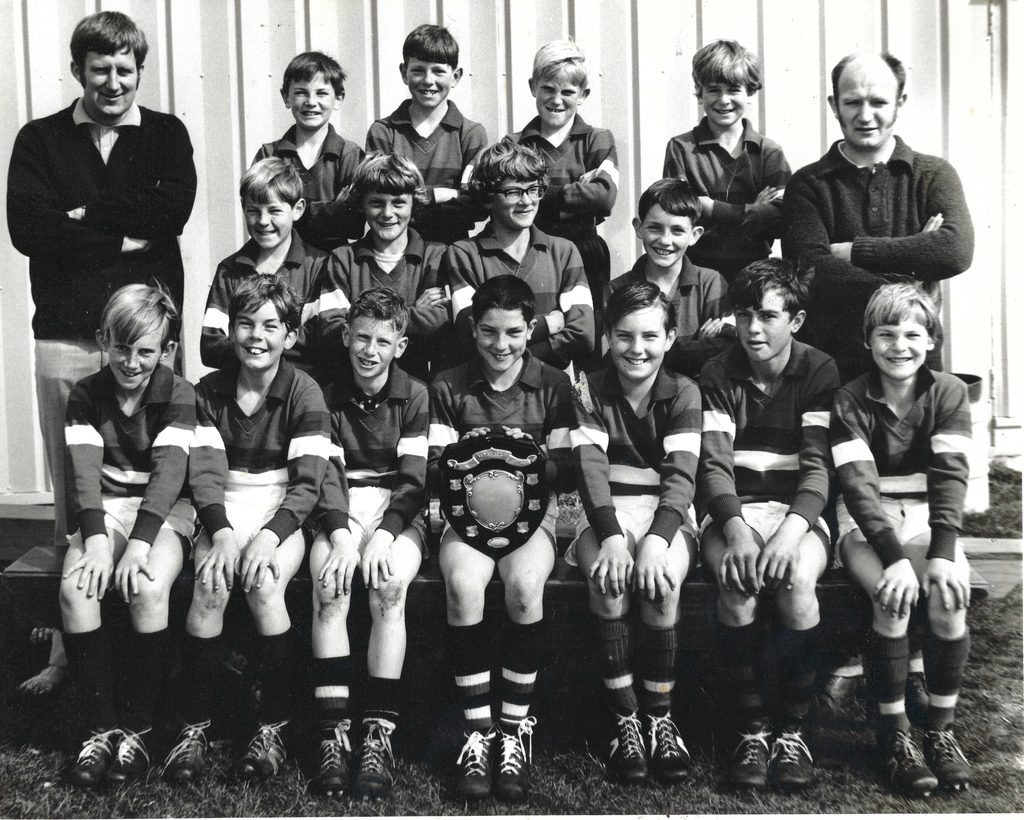
Two years later, in Grade 5, West Somerset Primary fielded its first football team. I played in the school’s inaugural match against Cooee Primary and then in every game until I graduated from West Somerset at the end of 1972.
In Grade 6 I also began playing Little League football at Wynyard every Sunday. Our team was the Bulldogs, and we weren’t particularly successful during the regular season. We finished last in the four-team competition.
Then something remarkable happened in the finals. We beat the third-placed team in our first final, followed that by defeating the second-placed team in the preliminary final, and suddenly the team that had finished on the bottom of the ladder was playing for the premiership.
We won the Grand Final.
I remember playing my heart out that day. Looking back, it was an early example of something I would notice about myself many times in later life: when an occasion really mattered, I often seemed able to find something extra.
Hockey
In Grade 6 another sport entered my life almost by accident. A new teacher at West Somerset decided to introduce us to hockey. He arranged some second-hand hockey sticks and formed a school team, made up mostly of Grade 6 students with a few from Grade 5.
I chose to play goalkeeper. I think part of the attraction was simply that it was different — a position unlike anyone else’s on the field.
We began our first season against Wivenhoe and lost 2–0. For a completely new team it wasn’t a bad result, particularly as we soon discovered that Wivenhoe was the strongest team in the competition. We won our next game, and then the one after that. When we met Wivenhoe again, we came closer but still lost 2–1.
Those were the only two games we lost during the regular season.
In the second semi-final we faced Wivenhoe yet again. This time we held them to a 2–2 draw, but the result meant Wivenhoe advanced directly to the Grand Final while we had to play the preliminary final. We won that game and earned another chance against them for the premiership.
Wivenhoe proved too strong once more, winning the Grand Final 2–0. We hadn’t won the premiership, but a team assembled from scratch with second-hand sticks had gone all the way to the Grand Final in its first season.
For me, hockey didn’t end there. I continued playing when I moved on to high school.
Cricket
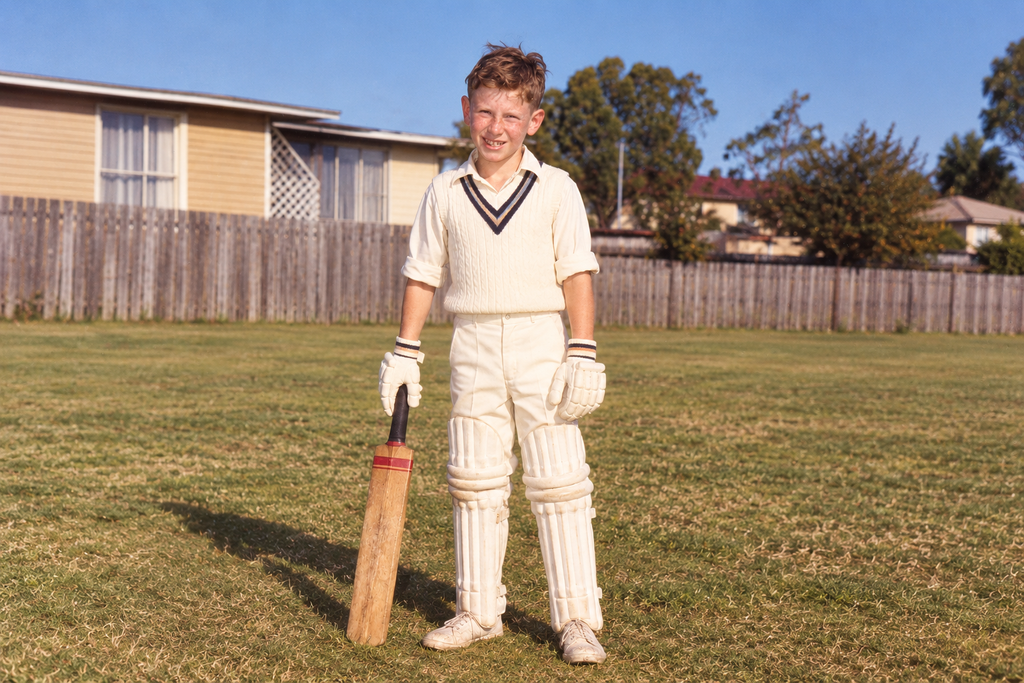
Cricket was another school sport, although it was never one of my strengths. When we played at lunchtime, my friends used to make fun of my bowling action. I became self-conscious about it and increasingly concentrated on my batting instead — unfortunately, I wasn’t particularly good at that either.
I usually batted well down the order and rarely troubled the scorers very much. I do remember one game in which our team was badly beaten. Coming in down the order, I somehow managed my highest-ever score of 13, including a boundary. My batting partner also made 13, which meant that in an otherwise fairly dismal performance, the two of us actually top-scored.
When I reached high school, I decided to try out for the cricket team. The coach asked whether I bowled. I said no. He then asked about my batting, and I explained that I was a specialist lower-order batsman.
He seemed understandably puzzled.
It was one of my first lessons in the difference between primary-school and high-school sport. At primary school, almost everyone played and making a team was largely a matter of wanting to be involved. At high school, the people trying out tended to be there because they were actually good at the game.
My cricket career came to a fairly swift end — at least for a while.
Athletics
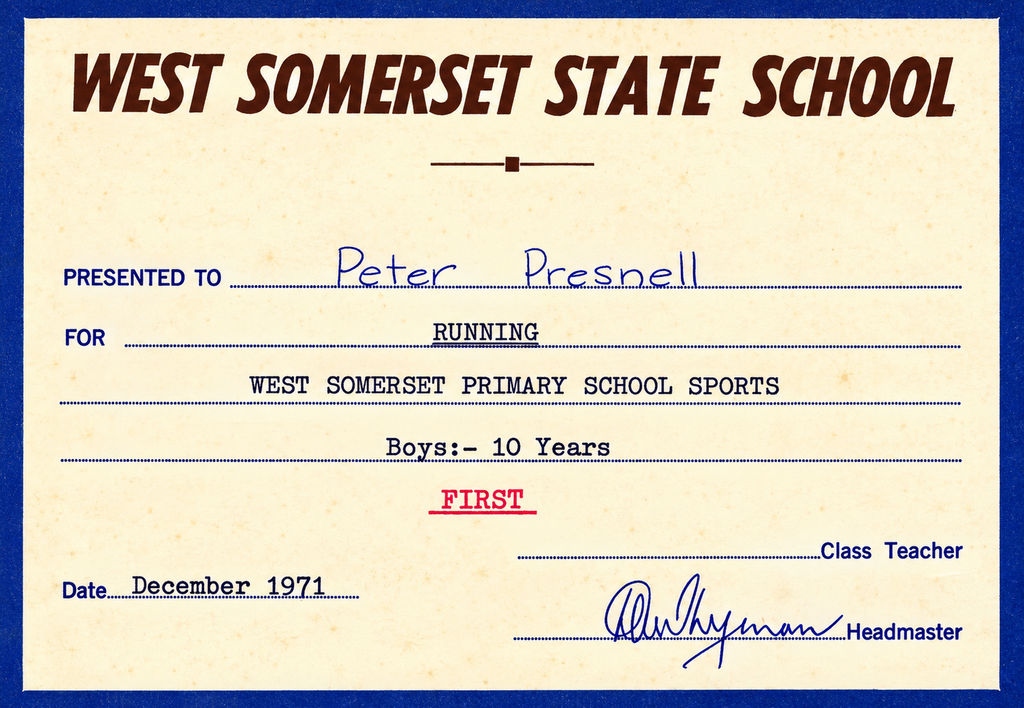
When it came time to prepare for the annual school sports carnival, I finally found a sport at which I was genuinely good. I was the fastest runner at West Somerset and, after winning the races at school, was selected to represent us in the running events and relay.
The main carnival was held in Devonport and brought together primary schools from across Tasmania’s North-West Coast. I progressed through the early rounds, racing against boys from schools of a similar size, and eventually made it through to the final involving competitors from all the schools.
I don’t remember where I finished in that final, other than that I didn’t win. What I do remember is how proud I felt to have progressed that far. Only a few students from our small school reached that stage of the competition, and doing so meant earning additional points for West Somerset.
At the time it was simply an exciting day representing my school. I couldn’t have known it, but those races in Devonport marked the beginning of something that would become a much bigger part of my teenage years.
It was the beginning of my life as an athlete.
Winning a Scholarship
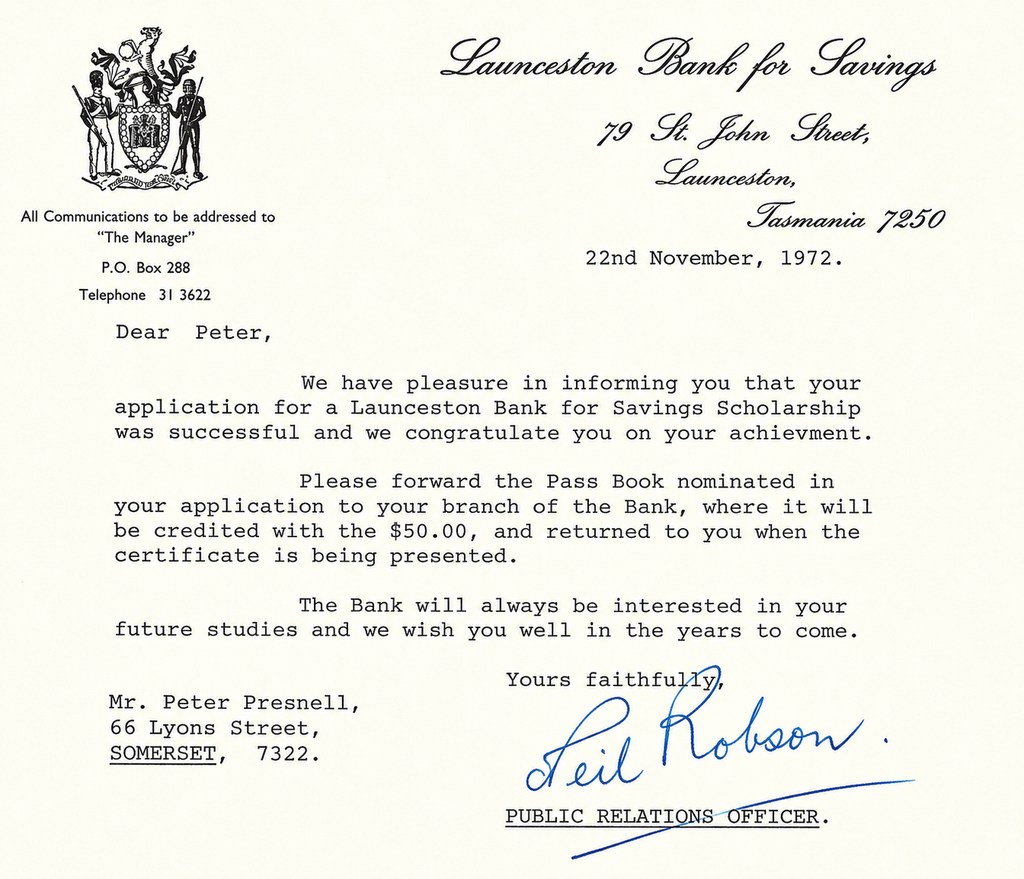
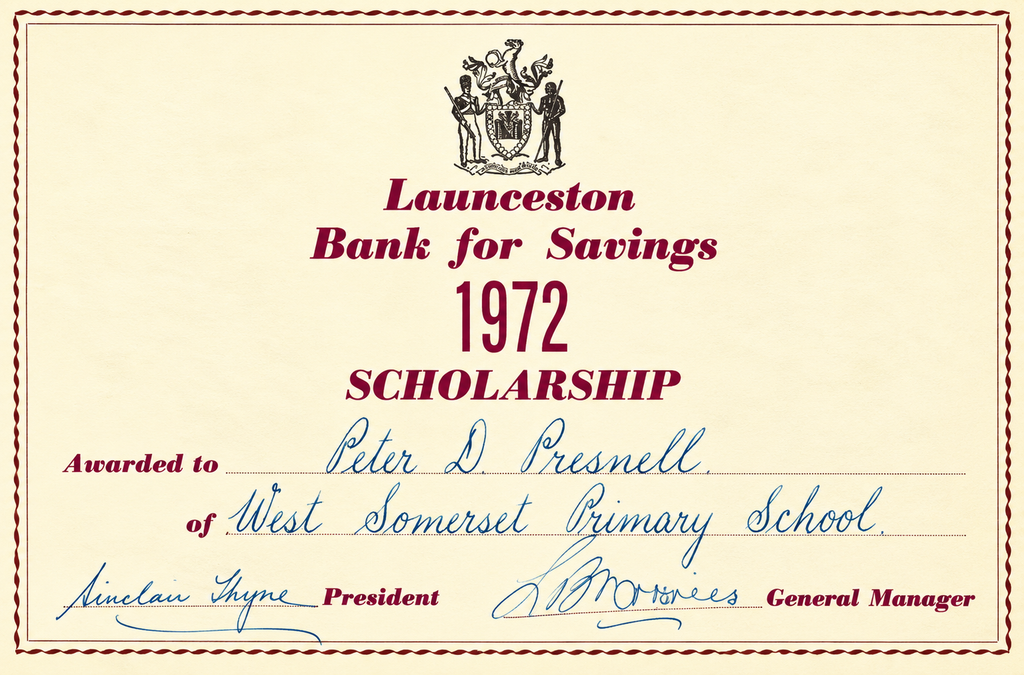
My final year at West Somerset ended on another high note. I applied for a Launceston Bank for Savings Scholarship, one of 50 being awarded across Northern Tasmania. The selection process included travelling to Launceston for an interview — quite an event for an eleven-year-old from Somerset.
On 22 November 1972, a letter arrived telling me that my application had been successful. The scholarship came with $50, which was credited to my bank passbook, as well as a certificate recording the award.
There was one small twist to the story. The bank manager later came to West Somerset Primary School to present the award in person. By sheer bad luck, it happened on one of the very few days I was ever absent from school because I was sick. I had no idea the presentation was planned for that day, so I missed it completely.
Starting High School
In 1973, I left West Somerset Primary School and began Grade 7 at Burnie High School. We were still living at 66 Lyon Street, which meant that for the first time since our days at Table Cape, I had to catch a bus to school each morning.
I was assigned to class 7D. None of the other students from West Somerset had been placed in my class, and I remember feeling a little lonely at first. After years of being part of the senior class at a small primary school, Burnie High was a much bigger and less familiar world.
Among the students in 7D was a girl named Allison Vincent. At the time she was simply another girl in my new class, and our lives would soon head in very different directions.
I could not possibly have known that 53 years later, in 2026, Allison would return to my life and become one of the most important people in it.